Saturday, June 15, 2013

UK, London: Lessons in History at Hampton Court Palace and at the Maze


I have been planning to visit the Hampton Court Palace while in London for quite some time now. Finally, on my recent stay in London I got that opportunity.

One of the reasons, I especially wanted to explore it is that The Wilderness Garden there houses the oldest maze known in Britain. It was built for King William III and Queen Mary II in 1690. I have longed to 'get lost' in it for a bit.


I chose my visiting day according to the weather report. And accordingly, it was a really fine day in London when I boarded a train at the Waterloo station for The Hampton Court Palace. It pays off to choose a good day against a rainy one as the gardens there are such a huge part of the visitor experience. My day was also a bank holiday in UK, so there were some extra attractions, like a big picnic on the lawn that made the visit really pleasurable for me and other visitors.

Since I did not really know much about the palace beforehand, I was very pleasantly surprised to find such splendor. It really homed on me how the history can be told in so many interesting ways to make it alive even for today.
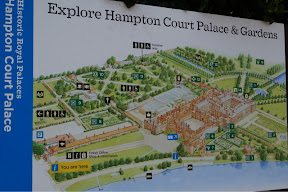

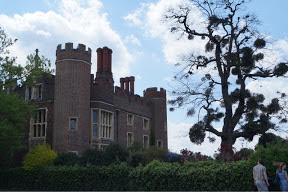
What I learned is that actually there are two palaces there; first one a Manor house developed into a palace by Thomas Wolsey, who was a powerful administrator for Henry VIII. He entertained the king there as well as a huge number of foreign dignitaries. In reality the place was a genuine hotel with kitchens servicing 1200 guests per day.
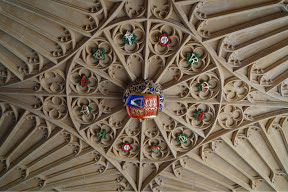

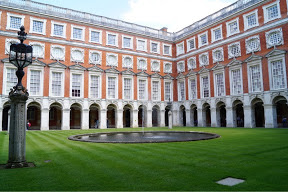
The second palace is a lovely baroque building built for Mary II and William III. They made the palace in what it is today.

And then there are the gardens from different eras kept with great dedications and research of which the Wilderness and the Maze (originally there were four of them) is the most popular.

My day at Hampton Court was all about understanding the dedication and the compassion of the people who have preserved the history for us in a way that speaks to a modern visitor. Even just seeing half of it convinces me that how we relate to history is through well written and illustrated storytelling. Learning about the young king Henry VIII certainly proves that.

What we remember from our history books is a completely different picture we get from the beautifully told story at Hampton Court Palace. There you come to understand the tragedy, the intrigue and the romance gone wrong that you otherwise might miss between Henry VIII and his first wife of more than 20 years, Catherine of Aragon.

I was walking through the rooms that depicted the young Henry VIII and came to a stop at the end. "This is a really sad room", I heard a father telling his son beside me.

On the wall there are all the names of their stillborn children (mostly boys) as well as the names of those children who died at birth. And of course Mary I and the little boy who lived for six weeks is there, also. The explanations on the chairs named Catherine, Henry and Thomas tell about the decision Henry made to divorce Catherine and how it affected the nation. Their individual stories.

This is real history lovingly brought to life for us in the modern world. I was left thinking how important it is to know those stories today. Now 20 years of their life and all those children has not gone unnoticed just because history has preferred hero stories instead of real life stories.


I really liked walking through the baroque palace with its wonderful ceiling art and small details, including bits and pieces of the Mary's famous porcelain collection.
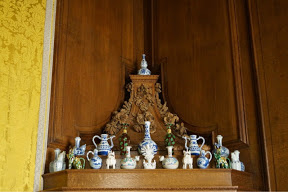

There was an exhibition there about the the secrets of the State beds. Unfortunately no pictures were allowed otherwise I would have photographed the queen's bed that reminded me of the fairytale of the 'Princess and the Pea' with its layers upon layers of silk mattresses, just like in all the illustrations I have seen. What a story it turned out to be, firmly grounded in the historic reality.
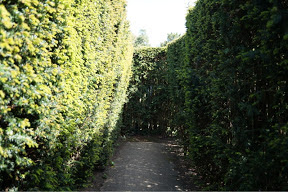

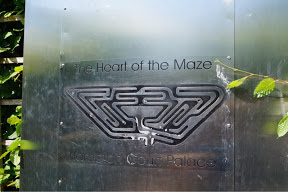
Finally, it was really fun 'getting lost' in the maze for a while, walking the old paths with lots of laughing families. And of course we found 'the heart'. It was not a very difficult task at all:

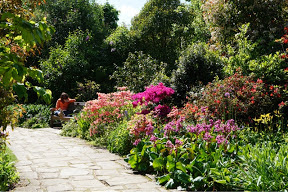
And the gardens were lovely, especially the Wilderness, that called the visitor to sit a while on a bench while taking in the atmosphere.

All in all, a day at the Hampton Court Palace was a success and I must go back since I missed the famous kitchens and the King Henry VIII's apartments and much more, I am sure.

But it was a start and a lovely day at that! I recommend it very warmly for anyone wanting a flash back to the long gone eras of royal life in Britain.
- Posted using BlogPress from my iPad

Sunday, May 19, 2013

Africa, Swaziland: My Introduction to Swaziland


I spent last week in Swaziland. It was my first ever trip to Africa. I was there getting to know the countryside, the people and a huge philanthropic initiative my Swazi-friends have taken on to help their local communities.

I flew to Johannesburg in South Africa and from there I was picked up by my friends and we drove five hours on a very good road to Mbabane, the capital of Swaziland.

I wasn't a tourist, so there were no safaris or other kinds of touristy things on my schedule. I was there to get acquainted with a grass roots level organisation, helping the communities in Swaziland in six centres situated in the main cities and in the rural area. I was there to see how I could share my leadership experience with community development and lend a fresh perspective to overseeing the organisational operations my friends have undertaken. This is what I have always wanted to do as a compassionate world traveler. Really practical application of compassionate action.

What I found was short of breathtaking:


The population of Swaziland is around one million mark in the country. Around 3.5 million Swazi-people are living on the South-African side in the immediate area to their country, all under the leadership of a king and his mother. I was touring with the best possible people so I had an opportunity to get an understanding of the Swazi culture from the inside.

I found it very fascinating and would recommend that a newcomer would take care and practice his/her cultural intelligence carefully by leaving their pre consisting attitudes behind and only after listening make judgements about the culture they encounter.

The Swazi-culture is dual in its every facet. There is the traditional tribal culture intertwined with the modern civilian laws which take some absorption to understand but in the end can make good sense. All Swazi-people love their King to bits, undivided.


Coming from Australia, I found it most fascinating that there is so much red rock and earth around. Iron ore is mined and transported in huge trucks to Mozambique for shipping to wherever it will be developed.


This looks so much like walking in the bush in the Australian outback.


There is plenty of scenic variation in the country from very high country to low lands. The huge lake in the previous picture is actually a dam that provides irrigation to a large highland region of the north Swaziland.


I met lots of local people. Here are some women from a women's group at the Kuphila (to have life) Centre at Mbombotha. They meet every Tuesday to produce whatever is decided as a weekly product for co-operative sale. Here with newly cooked floor polish that is used to protect and polish the concrete floors in their homes. Many other products are also produced from peanut butter to crocheted shoes.


Floor polish


Traditional crafts made from crass


Vaseline from Aloe Vera and shoes.


However, the most urgent need in Swaziland is to help the orphans, whose parents have died of AIDS to a better future. My friends help them on the crass roots level, directly in their local communities by feeding them daily, by education, activities and skilling.

Here is the coordinator at the Kuphila Centre at Emkhuzweni cooking what might be the only daily meal the vulnerable children and youth get in the area. There might be some adults there also.


These children really need your support. There are pre-schools that can take orphans in with other children. The term fee is around $50 AUS or €45. There are three terms in a school-year. Just email me on ejuusola@bigpond.net.au if you want information on how to directly support orphans in Swaziland through my consultancy's 'immediate relief fund'.


You can see this type of huts at every house in the country. They are used as dwellings but at least one is there for the family meetings. The attached roof is made from the ordinary crass that grows everywhere. The sun and the rain turns it black.


Here seen from the inside.


And here is the edge. It is really thick, about 30cms.


On the roadside, you may encounter local craft centers, where talented artists and other people sell their artworks and products. This man, for example has learned his trade from his grandfather and is now producing African animals carved from local wood and stone. He regularly attends national competitions and has won several prizes.


The roadside craft market at the north of Swaziland


At the chief's lands there are bush that can be turned into gardens to help with the food security of the community.


It is possible to grow crops also in winter, however, often the irrigation is a huge problem. Here, for example the irrigation could be lead from the nearby river, if there were some resources. My immediate relief fund can help you to support the gardening activity also. Just let me know by email and I will send more information.


Here is the recently built Mbombotha Centre, that has such potential for helping the people of the local community. A pre-school has already been founded and started here. But more needs to be done, especially by skilling youth and women to a better future.

There is space to expand to help orphans as well. Your direct support would be greatly appreciated in any form. Just let me know and I will be able to network with you about information. I can be befriended on LinkedIn as well.


This now an empty center was built by a Canadian person, who came here to help. She is gone now and the centre is idle but in prime condition. There are plans for its development as it would be ideal as an arts centre. Support is needed there, too.

Everywhere, I travel in Swaziland, I encounter huge possibilities and enormous need for co-operation with compassionate projects from abroad and such warmth from the local communities and especially my hosts, who coordinate voluntary teams that work in the communities, maybe only once a month. Lots of pastors are involved in the grass roots community work as is expected. My friends organisation for example provides skilling in how to psychologically manage the huge tasks taken on by direct voluntary or paid staff.


There are people who have developed very successful tourist businesses in Swaziland. The owners of this famous establishment came to visit the country and never left. Here they have a multi-purpose events area, an excellent restaurant, shops and tourist services under one roof, so to say.


Here is the restaurant where we had a fabulous meal.


In this area there will be a huge youth event just as I am leaving the country. Some wonderful craftsmanship and design ideas are used to create new environment for different purposes.


'Gone Rural' is one of the Swaziland's success stories in exporting high class designer items abroad. This is the local store right there.


The products are magnificent.


And the proof of the quality can be witnessed around the world in the most prestigious shops.


This is the Ematjeni Guest House courtyard. Such luxury is hard to find anywhere where the guests are so warmly and individually cared for. It is like being a visitor at someone's private home.


And here is the fabulous view, right from my window:


So, if you are planning a trip to Africa, why not plan on visiting Swaziland. You won't be disappointed. It will be interesting in a very wonderful way.

Next time around, I will do some 'touristy' things as well and see what more there is to offer. For now, I thank the compassionate people of Swaziland I have had a pleasure of getting to know and look forwards to my next visit there, which surely will be in an immediate future.
- Posted using BlogPress from my iPad

Friday, May 3, 2013

Australia, Victoria, Macedon Range: Climbing The Hanging Rock


The Macedon Range in Victoria, Australia is just a place for a compassionate traveler to visit. The possibilities are great for a day in leisure combined with adventure for the whole family. The Hanging Rock (Formerly Mount Diogenes) with the hint of mystery should be at the top of the list for anyone wanting an outing spent with a friends and acquaintances.

The Hanging Rock is a former volcano, left from a few million (6.25) years as a monument on how a special kind of stiff lava can form peculiar sites. The formation is geologically called a 'mamelon' because it is formed from dense lava that does not flow away after eruption but instead forms a hill in the place.

In 1967, a novel 'Picnic at Hanging Rock', written by Joan Lindsay was published. It is a story of a party of schoolgirls and their teacher who went to a picnic at Hanging Rock in 1900. Some of the girls and later the teacher disappeared mysteriously while there. The case was never solved in anyone's satisfaction.

This story inspired a film:


'Picnic at Hanging Rock', in 1995, directed by Peter Weir. It was one of the first Australian films that truly created an international following.

The Hanging Rock has also inspired plenty of artists:


'At The Hanging Rock' by William Ford, 1885. (Picture from Wikipedia) is one of the earliest ones on display at the Victorian National Gallery.

I went looking for that particular place it was painted at and may just have found it here:


The Hanging Rock is quite a challenge to climb. I recommend sturdy shoes and great spirits.

There is a large picnic ground at the bottom, including a restaurant and a discovery centre. We found it really inspirational.

There are two ways up the rock, the stairs and the well made path. It should be easy to climb, being only 105m above the plain, even for the faint hearted, providing some rests can be had. Though, caution is recommended as always.


We found the rock really majestical and fun. The climb was vigorous activity and the discovery centre and the shop a real treat.


We inspected several cracks just to make sure that all has been done to solve the mystery of the Hanging Rock by now. Nothing suspicious was found.

At the end of the day, we had some ice-cream, the really fabulous kind, paid our $10 fee for the car to get out of the gate and left with great satisfaction.

A well recommended and enjoyable day for everyone.
- Posted using BlogPress from my iPad

Saturday, April 20, 2013

Australia, Victoria: Visiting the Historical Beechworth.


This is the second time I am visiting a dear friend at Wodonga, Victoria. Last year we started our tour of the surrounding historical Gold Rush towns by visiting Yackandandah. This year it was time to investigate the town of Beechworth made famous as the birthplace of the Australian bush-wrangler Ned Kelly and by all the stories surrounding him and his gang.

As it was my second time around, I was already prepared for the idyllic atmosphere of the town. The trees were just getting their autumn colours and the streets were full of happy and curious people. I was told that the town lives for the weekends when the tourists flood the streets and the shops in order to unwind from their worldly troubles.


By dropping into the town visitor information centre the curious traveler is able to get all the needed help about accommodations, tickets to venues, souvenirs and the latest books on the Kelly family.

In fact, I was really impressed by the compassionate attitude of the information shop attendant. She was tackling the wealth of enquires showing such knowledge and problem solving skill, well worthy of high recommendation. I am sure that the inviting manner she displayed will play a crucial part on the impression the visitor gets of the town.


Our first goal was to experience the Beechworth Bakery and taste its famous pies. I had a vegetarian Coulicolli Pie and my friend ate a Curry Pie. For the dessert, we had an apple pie, all with a nice cup of tea while watching an endless flow of people. There was a huge cycling event going on in town and everyone was milling around getting drinks and snacks.


And of course, we bought some home with us as well. Especially as it will be the Anzac Day soon and this particular bakery is so very famous for baking the Anzac Biscuits just right. I just had to have some.


Our second stop was the charming and old fashioned Burke Museum where we were able to get a warmhearted insight to the 19th Century town life through walking through the displays of shops and streets representing the history of the town.


The very famous Ned Kelly was introduced through his original death mask and the amour.

The building was originally built for the Beechworth Men's Association, later to become the Athenaeum for educating the young men of the area.

I spent some time reading a few articles on Ned Kelly's final funeral that was conducted 132 years after his death, only in January, this year (2013). I had missed that. Also I longed to buy the new book on Ellen, Ned Kelly's mother that I found in the shop. It promised to be a great read giving lots of new insights to the life and times of the historical town life and its women's blights. Unfortunately, it weighted a lot and I am flying home soon.


The rest of the day was spent wandering the historic and cultural precinct of Beechworth on the 'Echoes of History' walking tour, taking pictures and inhaling the idyllic atmosphere.

According to the Official Visitor Guide book, there is lots to do in Beechworth for curious families, including nature and ghost tours. And did you know that the famous'General' Tom Thumb who was 77 cm tall and the celebrity in his own time around the world and who was presented to Queen Victoria and the Char of Russia, was also from Beechworth?

I am quite certain that a few days holiday at any of these historical towns but especially at Beechworth will be able to help to relax anybody wanting some relief from the hurries of the big city or otherwise stressful life.

Spending some time there will be able to educate the compassionate traveler on how to preserve the historical heritage of a town in a loving, heartwarming and respectful way.
A recommended choice for great time.
- Posted using BlogPress from my iPad

Saturday, December 15, 2012

USA, South Carolina, Greenville: A Very Special Kind of Scavenger Hunt


Be charmed by a visit to Greenville in South Carolina in the USA. This city has a special treat to offer for those on the hunt for fun activities for the whole family.

In 2000, Jimmy Ryan, a high school senior from the local area wanted to do something special for his community by designing and developing the famous Mice on Main Scavenger Hunt for little mouse sculptures inspired by the popular Children's book Goodnight Moon. He raised funds and worked with a sculptor Zan Wells who created the little mice in bronze. They can be found hidden along the Main St of Greenville where thousands of people come to find them.


According to what I was told, the city has done a lot in beautifying the Main Street and the local Falls Park. The partnership of Jimmy Ryan and Zan Wells now also includes a writer Linda Kelly who wrote a book about how the Mice on Main found their 'freedom' and 'sparkle' prompted by her grand daughter who wanted to know about how the mice found their places on the street.

The combined efforts of the city, the creator, the artists and the writer have certainly paid off with the popularity of the park and the hunt that fills the city with tourists on a nice autumn day. It can be said that the realization of one brilliant idea has really created value for the community of Greenville. We certainly enjoyed our day there.


There is lots of information to be found by just googling Mice on Main or the name of artists. They have created additional goodwill with little mice sculptures and special t-shirts. The proceeds from the book and the shirts go to a charity it the area.

So, it can be said that Greenville presents its compassion and friendliness for the community and the world in practice with a very charming front. I look forwards to visiting there again and recommend you to do the same.

- Posted using BlogPress from my iPad