Showing posts with label London. Show all posts

Saturday, June 15, 2013

UK, London: Lessons in History at Hampton Court Palace and at the Maze


I have been planning to visit the Hampton Court Palace while in London for quite some time now. Finally, on my recent stay in London I got that opportunity.

One of the reasons, I especially wanted to explore it is that The Wilderness Garden there houses the oldest maze known in Britain. It was built for King William III and Queen Mary II in 1690. I have longed to 'get lost' in it for a bit.


I chose my visiting day according to the weather report. And accordingly, it was a really fine day in London when I boarded a train at the Waterloo station for The Hampton Court Palace. It pays off to choose a good day against a rainy one as the gardens there are such a huge part of the visitor experience. My day was also a bank holiday in UK, so there were some extra attractions, like a big picnic on the lawn that made the visit really pleasurable for me and other visitors.

Since I did not really know much about the palace beforehand, I was very pleasantly surprised to find such splendor. It really homed on me how the history can be told in so many interesting ways to make it alive even for today.
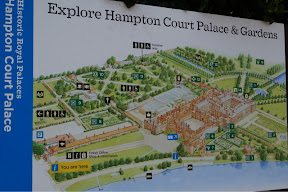

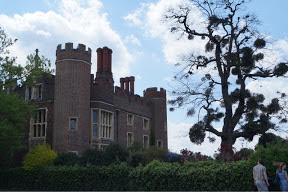
What I learned is that actually there are two palaces there; first one a Manor house developed into a palace by Thomas Wolsey, who was a powerful administrator for Henry VIII. He entertained the king there as well as a huge number of foreign dignitaries. In reality the place was a genuine hotel with kitchens servicing 1200 guests per day.
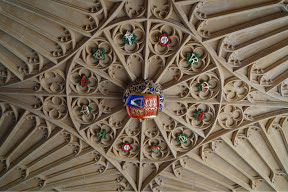

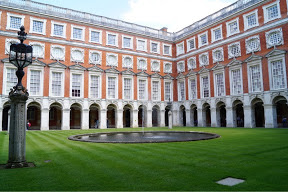
The second palace is a lovely baroque building built for Mary II and William III. They made the palace in what it is today.

And then there are the gardens from different eras kept with great dedications and research of which the Wilderness and the Maze (originally there were four of them) is the most popular.

My day at Hampton Court was all about understanding the dedication and the compassion of the people who have preserved the history for us in a way that speaks to a modern visitor. Even just seeing half of it convinces me that how we relate to history is through well written and illustrated storytelling. Learning about the young king Henry VIII certainly proves that.

What we remember from our history books is a completely different picture we get from the beautifully told story at Hampton Court Palace. There you come to understand the tragedy, the intrigue and the romance gone wrong that you otherwise might miss between Henry VIII and his first wife of more than 20 years, Catherine of Aragon.

I was walking through the rooms that depicted the young Henry VIII and came to a stop at the end. "This is a really sad room", I heard a father telling his son beside me.

On the wall there are all the names of their stillborn children (mostly boys) as well as the names of those children who died at birth. And of course Mary I and the little boy who lived for six weeks is there, also. The explanations on the chairs named Catherine, Henry and Thomas tell about the decision Henry made to divorce Catherine and how it affected the nation. Their individual stories.

This is real history lovingly brought to life for us in the modern world. I was left thinking how important it is to know those stories today. Now 20 years of their life and all those children has not gone unnoticed just because history has preferred hero stories instead of real life stories.


I really liked walking through the baroque palace with its wonderful ceiling art and small details, including bits and pieces of the Mary's famous porcelain collection.
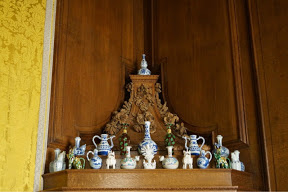

There was an exhibition there about the the secrets of the State beds. Unfortunately no pictures were allowed otherwise I would have photographed the queen's bed that reminded me of the fairytale of the 'Princess and the Pea' with its layers upon layers of silk mattresses, just like in all the illustrations I have seen. What a story it turned out to be, firmly grounded in the historic reality.
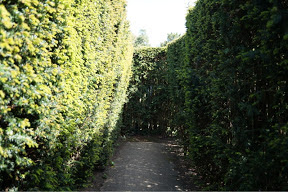

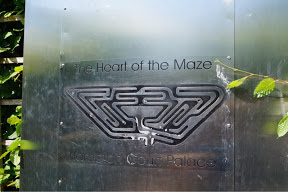
Finally, it was really fun 'getting lost' in the maze for a while, walking the old paths with lots of laughing families. And of course we found 'the heart'. It was not a very difficult task at all:

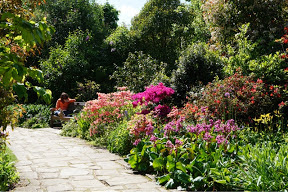
And the gardens were lovely, especially the Wilderness, that called the visitor to sit a while on a bench while taking in the atmosphere.

All in all, a day at the Hampton Court Palace was a success and I must go back since I missed the famous kitchens and the King Henry VIII's apartments and much more, I am sure.

But it was a start and a lovely day at that! I recommend it very warmly for anyone wanting a flash back to the long gone eras of royal life in Britain.
- Posted using BlogPress from my iPad

Friday, October 7, 2011

UK, London, V&A Museum of Childhood in Bethnal Green


One of the most fascinating and enjoyable places in London for a compassionate traveler to visit is the Victoria & Albert Museum of Childhood in Bethnal Green.

Our friends who have a few children say that they mostly "live there" and after visiting and witnessing all that is happening in the museum on a daily basis I must agree that one very well could. V&A Museum of Childhood is the kind of museum that you include in your frequent visits list. The exhibition and the activities change so often that it becomes a good place to pop in and have a lunch picnic at least once a month.


A few years back the museum underwent a thorough revamping. The exhibition was rearranged in themes that enabled much larger displays. The museum also got a new entrance hall inspired by the original designs for the building in the 1870's.

I thoroughly enjoyed walking around the display cabinets and finding my old childhood memories.


The collection of the old dollhouses was the highlight of my visit. My daughter found the dolls she used to play with and my son was totally fascinated by the action figures that represented the era when he used to play with them. There was something for everyone.


One big part of the museum displayed mechanical toys and small cars. We also found the display that presented book illustrations and what an illustrator does a fantastic experience.

If you are visiting London for a longer period of time, do plan on at least two days of visiting this inspiring museum as there is too much to absorb for just one visit. If you live in London or nearby, lucky you as you can also plan on participating in the many activities that the museum programs for children.

Thoroughly enjoyable experience. I give it 10/10!

- Posted using BlogPress from my iPad

Friday, September 23, 2011

UK, London - Madame Tussauds


Did you know that the building where Madame Tussauds is situated in London was built in the 1880's? At the time nobody thought about inclusion or the fact that someday it would be an attraction that requires several hours long wait outside on the street in order to view the collection. For certain nobody thought about disabled entry.

And why would the compassionate traveler spend a day at Madame Tussauds anyway? Would that add to the compassion in action that we are looking for in this blog?

Well, it would be an interesting day, to say the least.


Our experience

Last I visited Madame Tussauds in London was approximately 10 years ago. The collection on view is totally different from that one I saw then. Even the setting has changed. Certainly, I have never visited it with someone in a wheelchair. So, this time around our experience was totally in it's own category.

Due to the fact that the building is so old, some very inventive modifications have been made to allow for lifts, ramps and such and still it leaves for some places where it is just not possible to accommodate for people who cannot walk. Only three visitors with wheelchairs are allowed in the building at any one time. For the visitors, this is both good news and bad news.

Firstly, there is a booking procedure where you have to go the entry door and negotiate a time to enter. Good news is that you do not have to be cuing for hours to get in, you can do something else, like visit the rose garden at the near Reagent Park.

Secondly, you need to prepare for somebody watching over you at all times and rushing you on to keep to the two hour timeframe that the museum has predicted an average visitor spends there. Unless you remember to tell them that you want to shop at the store, you will miss it.

Otherwise, everyone at Madame Tussauds wants you to have a wonderful experience. They are very helpful and attentive. You get to see really finely fitted lifts and even have to walk around the whole building outside with a guide to get to the amphitheater. But all in all you'll have a very enjoyable time.


Why compassion in action?

Ten years ago, while visiting Madame Tussauds, I was struck by a one single doll. Then, it was the oldest doll in the exhibition called 'The Sleeping Beauty' and it was made out of the death mask of Marie Antoinette, the beheaded Queen of France of the French Revolution. The historian in me was intrigued.

What is pictured here is a replica on exhibition now and wait for it, it breaths. Just keep watching and the breastplate moves.

Marie Antoinette was a friend of Madame Tussaud's before the revolution. The doll artist, namely, had been modeling wax representations of famous people even before the revolution.

During and after the revolution she was ordered to collect and make death masks of the beheaded people, many of whom she knew. Marie Antoinette was one of them.


It has always intrigued me of why would all the macabre scenes of horror be so carefully kept at display at Madame Tussauds in London. Now I know. It is that we do not forget. That they might strike someone as what they are, a tremendous memory of suffering.


After spending a day at the overcrowded Madame Tussauds peaking at the famous wax people being photographed with exited modern visitors, I look at it as a testament to a lady who managed to turn her horrible war experiences into the art of fun and excitement. That would be compassion in action.


In my mind a visit to Madame Tussauds in London is a must for a compassionate world traveler. It is worth waiting in the cue and trying to fit into a room filled with excited people. It brings a smile on your and your companions' face, whoever they are and inspires to think about the fine art of wax doll making as a truly spectacular trade.

- Posted using BlogPress from my iPad

Tuesday, August 2, 2011

UK, London - Florence Nightingale Museum


"I craved for something worth doing instead of frittering time away on useless trifles." Florence Nightingale

It is often said that the most horrible experiences produce the most extraordinary changes in human condition.

The Florence Nightingale Museum at the heart of London attest to a remarkable story of a woman and people who tirelessly work to change the human condition.

Florence Nightingale's struggle as a young woman


Being a woman from a wealthy upper-middle-class background during the early 20th Century, Florence had to fight for her rights to become something more than just a suitable wife and mother. In fact, she never married, instead she felt that she had been called by God to become a nurse.

She often wrote about her frustration of the expectations of the society for a woman of her status. However, she had devoted friends who supported her aspirations, even if her family did not do so right from the beginning.

After much struggle, she got her initial training as a nurse in Germany. Her upper-class status put her into a position of influence and her eager interest in statistics backed up her claims for a total health reform in the British Army. She was most hailed for her work at establishing the English female nurses to Constantinople (Istanbul) during the Crimean War.

Crimean War (1854-56)


Initially the Crimean War experience in Turkey proved to be a medical disaster for the British Empire. More solders died from the wounds than from the battles.

Due to the new technology, it was the first time in history the public was able to follow a war through the daily reports in the major papers. The public opinion influenced the politicians to act as the horrors of the war were laid out in article after article.

Florence was asked to lead a group of female nurses (38) to the war hospital in Scutari. In there she displayed a great skill in diplomacy, in organisation and in managing the hospital resources.

She battled dare conditions, appealed to the public who answered through donating funds through the Times. The reluctant army officers were forced to act. Her image as 'the Lady with the Lamp' was established and served to draw attention to her and her appeals for reforms.

Through her principal work and publications, Florence was able to petition for nursing to become an established part of the hospital health system.

The Museum at the St Thomas Hospital in London


The Florence Nightingale Museum is a great little museum to visit. A compassionate world traveler is introduced to her life as a young woman and her struggles to became a nurse.

The visitor gets a comprehensive understanding of her work at the Crimean War Hospital and her life after the war. It was filled with research and writing. She published some 200 publications before she died at the age of 90 in 1910.

My thoughts on the visit

I have been interested in the Crimean War and it's relationship to philanthropy for a while. Many new charitable reforms were initiated after the experience of this war.

Being from the Finnish background I am aware of the Baltic battles as well and the effect they had on the Finnish economy then and during the famine not long after the war. I am also acquainted with the history of the Russian and Finnish nursing as well as the history of the founding of the Red Cross. The effects of industrialisation could be traced everywhere and it in it's turn brought a new kind of focus on charity and reveled the compassionate side of the humanity. To me the Florence Nightingale Museum proved to be a wonderful experience.

The aim of the museum is to demonstrate the way Florence Nightingale's ideas and influence relate to today and the set up of the museum succeeds in showing the relevance of her work for today's health care.

All around the museum walls the visitors can follow the development of nursing from it's beginnings to the highly respected profession it is today. This is her 'legacy'.


Other interesting things you get to be introduced to are:
- Florence Nightingale's temperamental pet owl Athena
- Alexis Soyer and his famous 'Soyer Field Stove'. The British Army used it for 120 years after the Crimean War
- Mary Seacole, a herbalist and a hotel keeper who set up a general store, canteen and an unofficial surgery on the way to the front line.

The Museum is also focused on giving children a good learning experience.Very enjoyable.


- Posted using BlogPress from my iPad